The Perfect Storm: Why Climate Risk and Inflation Are Spiking Insurance Costs in 2026
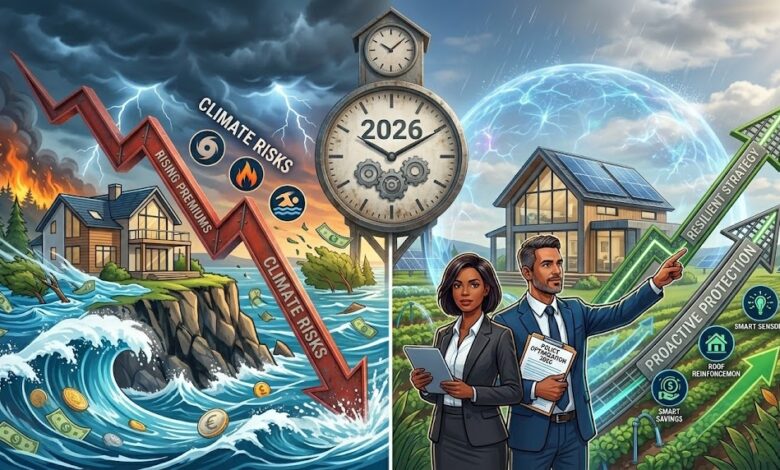
The global insurance landscape is undergoing a massive transformation. For years, insurance was viewed as a static, predictable financial safety net. However, as we move through 2026, a combination of macroeconomic pressures and accelerating climate shifts has forced providers to completely rewrite their underwriting playbooks.
For policyholders, this means “business as usual” is over. Understanding these dynamics is no longer just for financial analysts—it is essential for anyone looking to protect their assets without draining their bank accounts.
The Dual Engines Driving Premium Hikes: Climate & Inflation
If you have noticed your auto or homeowners insurance premiums creeping up—or skyrocketing—you are not alone. Two primary drivers are reshaping the industry:


1. The Cost of Rebuilding (Economic Inflation)
While broader economic inflation may show signs of stabilizing, structural inflation within the construction and automotive repair sectors remains high.
-
Supply Chain & Labor: The cost of specialized building materials and skilled labor has sustained a high baseline.
-
Advanced Tech: Modern vehicles are packed with sensors, cameras, and EV batteries, making standard collision repairs significantly more expensive than they were a few years ago.
2. The “Uninsurable” Landscape (Climate Risks)
Climate change is no longer a future projection; it is an active line item on insurance balance sheets. Severe weather events—ranging from historic wildfires to unpredictable flash floods—have led major insurers to restrict new policies or pull out entirely from high-risk regions. This reduction in market competition naturally drives prices upward for the remaining available coverage.
Redefining “Protection”: What to Watch in 2026
To adapt to this high-risk environment, insurance products are evolving. As a consumer, you need to be aware of these shifting policy structures:
-
Parametric Insurance Gains Traction: Instead of waiting weeks for a claims adjuster to assess physical damage after a disaster, parametric policies pay out a set, predetermined amount immediately if a specific trigger event occurs (e.g., a hurricane reaching a certain category or an earthquake hitting a specific magnitude).
-
Usage-Based Insurance (UBI) Becomes Standard: In auto insurance, “pay-how-you-drive” and “pay-how-much-you-drive” programs are moving from optional discounts to mainstream requirements for securing competitive rates.
-
Stricter Policy Exclusions: Read the fine print. Insurers are increasingly carving out specific exclusions for wind, hail, or water damage, shifting more financial liability back onto the property owner.
Actionable Strategies to Safeguard Your Wallet
You don’t have to be a passive victim of rising insurance costs. Here is how you can proactively optimize your protection strategy this year:
💡 Audit and Adjust Deductibles
If you have a solid emergency fund, consider raising your deductibles. Shifting your homeowners or auto deductible from $500 to $1,000 or $2,500 can meaningfully lower your monthly or annual premium payments.
💡 Mitigate Risks Physically
Insurers are starting to reward proactive risk management. Installing smart leak-detection systems, reinforcing roofs against high winds, or parking vehicles in secure, covered garages can make your profile much more attractive to underwriters, unlocking hidden discounts.
💡 Unbundle and Shop Around (Strategically)
While bundling home and auto insurance traditionally yields the best discounts, the volatile 2026 market means split policies can occasionally be cheaper. Use independent brokers to shop your coverage across multiple highly-rated carriers to ensure you are getting the true market value.