
China Exports Jump 25% in August on AI Demand Ahead of Trump-Xi Summit
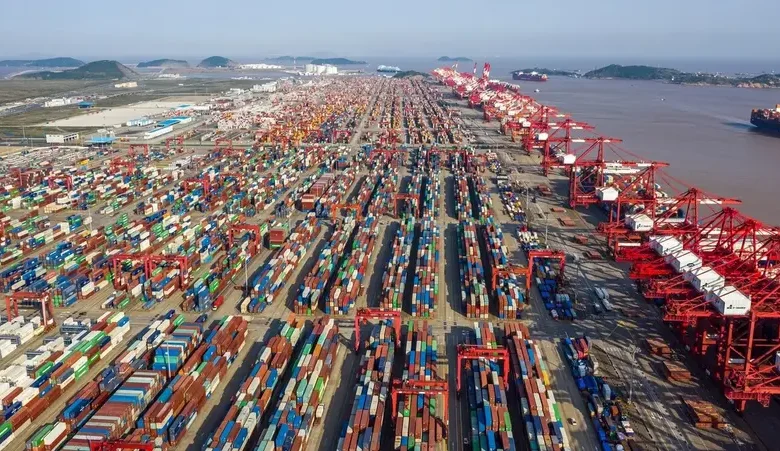
China’s foreign trade maintained robust growth in August, fueled by surging global demand for artificial intelligence-related technology products, just ahead of an anticipated summit between Chinese President Xi Jinping and U.S. President Donald Trump.
Data from the General Administration of Customs showed that exports rose by 25% year-on-year in August, compared to 23.9% growth in July, slightly missing Bloomberg analysts’ expectations of 25.9%. Meanwhile, imports increased by 28.2%, up from 27.5% in July, though also trailing Bloomberg’s forecast of 31%.
Nguyen Hoang Nam, China economist at Capital Economics, noted that China’s trade growth remained resilient in August with exports and imports expanding at a rapid pace. However, he pointed out that import momentum moderated after seasonal adjustments, reflecting ongoing sluggish domestic demand.

External shipments have served as a critical pillar for the Chinese economy in recent months amid a relative slowdown in domestic activity. Alicia Garcia-Herrero, chief Asia-Pacific economist at Natixis, suggested that the recent uptick in imports is more closely tied to corporate spending on computing power, electronics, and industrial investments than a broad recovery in household consumption. This trade strength persists despite a contraction in China’s factory activity for the second consecutive month, according to data released last week.
AI Drives Export Momentum
China’s recent export performance has benefited immensely from the global AI boom, alongside strong growth in electric vehicles (EVs), consumer goods, and industrial equipment.
Between January and August, the value of China’s computer and related equipment exports surged by 49.4%, while automotive exports jumped by 53.2% over the same period, according to customs data. Zhiwei Zhang, president of Pinpoint Asset Management, emphasized that China continues to rely heavily on exporters to support its broader economy. China’s cumulative trade surplus reached $805.5 billion by the end of August, bringing it close to surpassing last year’s record high.
Trade Imbalances and Geopolitical Tensions
Conversely, trade disparities between China and several global partners have widened, drawing complaints from foreign officials regarding the competitive pressure of Chinese imports on domestic markets. Zhang noted that the U.S. government clearly voiced concerns over trade imbalances during the G20 meeting.
Chinese exports to the United States rose by 34.4% year-on-year in August, accelerating from a 17% increase in July. These figures precede an upcoming Washington summit between Xi and Trump, as bilateral trade relations remain tense following the sweeping tariff policies implemented by the U.S. president last year. While Washington temporarily froze higher tariffs on Chinese products and Beijing responded in kind, both nations continue to navigate complex economic friction.
Garcia-Herrero remarked that a primary focus of the summit will likely involve curbing China’s further advancements in artificial intelligence. Nevertheless, the latest trade data underscores China’s persistent technological momentum. In August, the share of direct Chinese shipments to the U.S. stabilized at around 10%, while shipments to ASEAN nations remained high, according to Nguyen. Additionally, China’s trade surpluses with the European Union and the United Kingdom remained exceptionally high, fueling protectionist pressures.