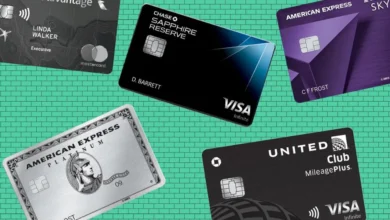
Battle of the Plastic: The Ultimate 2026 Credit Card Rewards Breakdown

For decades, the average consumer’s focus when choosing a credit card was almost exclusively on the Interest Rate (APY) or the Annual Fee. While those factors are critical, the landscape of 2026 demands a more sophisticated approach. In the current economy, where inflation lingers and the cost of living remains high, the true value of a credit card is no longer about borrowing money—it is about maximizing the value you receive for every dollar you spend. The credit card companies (like the ones advertising on Finance Shoot right now) are fighting fiercely for your loyalty, offering reward structures more complex and lucrative than ever. This guide is designed to help you decode those structures and choose the card that maximizes your unique financial spending.
1. The Rewards Trinity: Understanding the Core Structures
Before comparing cards, you must understand how they generate value.
-
The Trinity: Rewards generally fall into three categories: Cashback, Travel Points, and Transferable Points.
-
-
Cashback: The simplest structure. A flat percentage (e.g., 2% on everything) is returned as a statement credit or bank deposit. Best for minimalism.
-
Travel Points: Points can be redeemed only within the issuer’s portal for flights, hotels, or car rentals. Best for a specific loyalty program.
-
Transferable Points: The gold standard of modern rewards. These points (like Chase Ultimate Rewards or Amex Membership Rewards) can be transferred to dozens of different airline and hotel partners. This offers the absolute highest potential value (e.g., redeeming points for a $5,000 international business class flight rather than just $500 cash back).


2. The Travel Card Titan: Unlocking Elite Value
If you travel even twice a year, a premium travel card is likely your best financial asset.
-
The Strategy: These cards have high annual fees (e.g., $550+), but their effective cost is often near zero. They offer annual travel credits (e.g., $300 towards any travel), lounge access (e.g., Priority Pass), and elite status with hotels.
-
The Math: If you spend $300 on travel and would have paid $200 for lounge access, your actual cost is only $50. Plus, the points generated can be redeemed for incredible value via transfer partners.
3. The Cashback Champion: Simple, Predictable Wealth
For those who do not travel or prefer extreme simplicity, cashback is king.
-
The Strategy: Use a tiered cashback structure. Look for cards offering 5% on categories you spend heavily on (e.g., groceries or gas) and a flat 2% on everything else.
-
The Advantage: Your rewards are immediate and unambiguous. The value you see (e.g., $100 cashback) is the value you get.
4. Security: The Silent but Essential Reward
In 2026, a card’s security features are a reward in themselves.
-
What to Look For: Do not just focus on fraud protection. Look for cards offering Virtual Credit Card Numbers (generating a unique number for each online merchant), robust Purchase Protection (reimbursing you for lost or damaged items), and Extended Warranties.
-
The Impact: Preventing one fraud event or getting reimbursed for a lost laptop is worth far more than a year of travel points.
5. The Hybrid Approach: Combining Powers
For advanced financial management, don’t choose just one.
-
The Strategy: Create a ‘stack.’ Use a dedicated high-tier cashback card for everyday non-travel expenses (e.g., groceries) and a premium travel card for all travel-related spending and to gain benefits (e.g., lounge access). This ensures you maximize all your spending.