
The End of Traditional Plastic: How Biometric Smart Cards are Redefining Banking Security
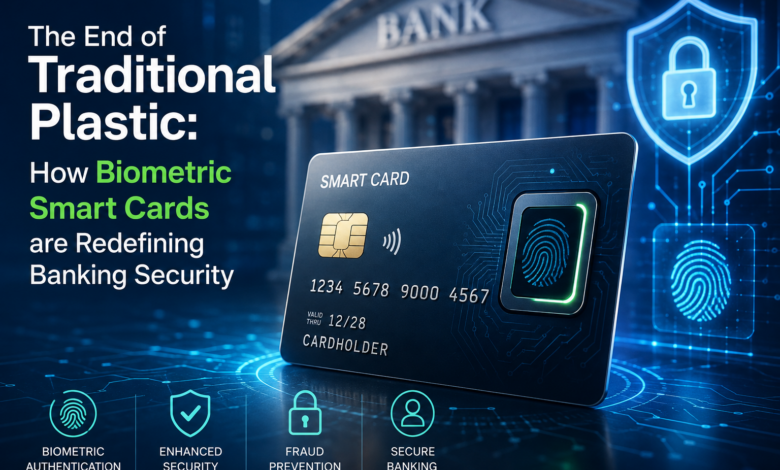
For decades, the standard plastic credit card has been the undisputed king of personal banking. However, as cyber threats grow more sophisticated and consumer demand for frictionless payments increases, the banking industry is undergoing a massive transformation. Welcome to the era of biometric smart cards—a technology that is rapidly replacing traditional plastic and setting a new global standard for financial security.
What Are Biometric Smart Cards? Unlike conventional bank cards that rely solely on PIN codes or signatures, biometric smart cards feature an embedded fingerprint sensor. When making a purchase, the cardholder simply places their thumb on the sensor while tapping the card on the point-of-sale (POS) terminal.
This innovation offers several distinct advantages:
-
Zero-Knowledge Security: Your biometric data is encrypted and stored directly on the card’s EMV chip. It is never transmitted to the merchant or even stored on the bank’s central servers, making it nearly impossible for hackers to steal.
-
No Payment Limits: Because the fingerprint provides absolute authentication, many banks are removing the transaction limits typically associated with contactless (tap-to-pay) payments.
-
Battery-Free Operation: These cards draw power directly from the payment terminal during the transaction, meaning they never need to be charged.
The Rise of Dynamic CVVs Alongside biometrics, another massive trend hitting the banking sector is the integration of dynamic CVVs. Instead of a static three-digit code printed on the back of the card, next-generation smart cards feature a tiny e-ink display. The CVV changes automatically every few hours. Even if a cybercriminal manages to copy the card details during an online transaction, the information becomes useless before they can exploit it.
Why Neo-Banks Are Leading the Charge While traditional banking institutions are slowly rolling out these features to their premium clients, digital-first “neo-banks” are making them standard. By eliminating physical branches, neo-banks are redirecting their capital into hardware innovation, offering users high-tech metal and biometric cards that serve as both a status symbol and a fortress for their funds.
The Bottom Line As we move deeper into a cashless society, the physical connection we have with our money relies heavily on the security of our cards. Biometric smart cards represent the perfect bridge between physical convenience and digital-grade security. For the modern consumer, upgrading to a biometric card is no longer just a luxury—it is a financial necessity.